


In the article you will learn that varicose veins are inherited, and there are also reasons why pathology can develop in ordinary people.
What are varicose veins?
Varicose veins of the lower extremities are a chronic deformation of the veins, most often of a hereditary nature, with persistent dilation of the lumen of blood vessels, decreased vascular tone, destruction of the valvular apparatus, disruption of regional blood supply, pain syndrome and constant pastiness of the tissue.
Where do dilated veins come from?
Normally, blood, which supplies oxygen to organs and tissues and removes residual carbon dioxide, travels from the periphery to the heart overcoming gravity.To do this, helpers are needed, which are the muscles of the legs, capable of acting as a kind of pump, contracting during movement, which moves the blood higher and higher.An equally important role is played by the valves of the veins, which block the reflux of fluid, hermetically blocking the lumen of the vessels.Blood flows through the vessels in only one direction.
If for some reason the functioning of the valves is disturbed, a gradual deformation of the veins is formed: blood overflows the vessels, causing them to stretch and deform.As the pathology progresses, trophic ulcers and blood clots can form in the area of the altered veins.
Varicose veins of the legs among women and men are quite common, in 50% of all vascular patients over 18 years of age.At the same time, the number of patients with varicose veins increases every year.The reason is the sedentary nature of professional activity.
The main cause of varicose veins in men and women is a genetically inherited weakness of the connective tissue that makes up the structure of the veins.Its failure causes loss of vascular tone, stretching of the walls and deformation.If the parents had enlarged veins under the skin, both children and grandchildren are likely to develop varicose veins.The disease is inherited through the female line: a gene is associated with the X sex chromosome that weakens the venous wall.
Of great importance are the hormonal changes in the body typical for women: menstruation, menopause, taking contraceptives, pregnancy, lactation.Men are also susceptible to hormonal imbalances, but much less frequently and after the age of 40.The jumps in female hormones: estrogen and progesterone relax the venous wall and cause its deformation.
Another cause of varicose veins is standing or sitting for a long time in a static position.In this case, the valves of the veins open and a persistent increase in intravascular pressure occurs.In addition, the longer the legs, the greater the column of blood in the vessels, which is a risk factor for the development of varicose veins.
Excess weight also does not contribute to vascular health.Excess weight increases pressure in the veins of the legs and fat deposits, especially in the abdominal area, interfere with normal blood flow.
Physical inactivity stimulates the formation of varicose veins in the lower extremities.In addition, the risk group for varicose veins includes smokers, pregnant women and patients with cardiac and vascular pathology.Surgeons, teachers, cashiers, salespeople, drivers, programmers, flight attendants and porters suffer from professional varicose veins.
On the other hand, it is worth mentioning the effect of alcohol on the veins.Of course, any alcohol, including red wine, expands the vascular lumen.In other words, this is another factor that predisposes to varicose veins.With regular consumption of alcoholic beverages, varicose veins are inevitable, it is just a matter of time.Also, if there is a hereditary predisposition to venous insufficiency.There are no gender differences in this matter.
Main signs of the disease.
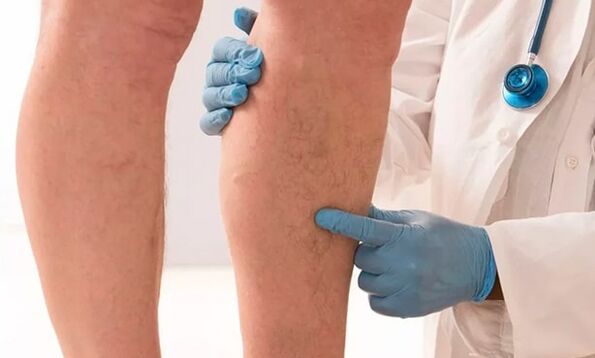
The first symptoms of varicose veins appear in the early stages of the disease: the legs begin to tire quickly, begin to swell, the veins become painful, the legs cramp at night, a feeling of heat and heaviness appears in the legs.
Sometimes this condition persists for decades until visual signs of venous insufficiency develop: pasty ankles and legs at night, itchy skin, tortuous veins protruding from the skin, bluish in color, dense.Over time, trophic ulcers resistant to treatment appear.
Why are varicose veins dangerous?
In addition to disrupting trophism, varicose veins threaten the development of thrombophlebitis, when blood clots in the veins can break off from the walls, block the lumen of the arteries, obstruct the pulmonary vessels and cause AMI with a fatal outcome.
Venous thrombosis: blocking the lumen of a vein with a thrombus causes intense pain, does not allow free circulation and can cause tissue necrosis.
Pulmonary embolism (PE): Blockage of the pulmonary artery by a dislodged blood clot causes death within half an hour.A small blood clot can cause a lung infarction that requires resuscitation.The condition is accompanied by pneumonia and congestive heart failure.
Is it possible to cure varicose veins?
Answer: yes, but only surgically.There are three modern methods to alleviate the problem: phlebectomy - complete removal of the deformed vein, sclerotherapy - injection of a special sclerosant into the affected vessel, which glues the walls of the vein, excluding the vessel from the bloodstream and emptying it without a cosmetic defect on the skin, laser coagulation - destruction of the vein with heat and sealing of the lumen (practiced when the diameter of the vein does not exceed 10 mm).
Prevention
- regular leg exercises during a long session;
- a balanced diet based on tomatoes, carrots, olives, apples, blueberries;
- prevention of constipation;
- adequate rest, especially for women who need three times as much time to recover;
- Correct drinking regimen: 40 ml of water per 1 kg of weight.
Swimming is useful when you spend little time in the sun, minimizing stressful situations.